Kestrel brings building code guidance directly into the design process, helping architects identify compliance issues while they are still designing instead of discovering them during permit review.
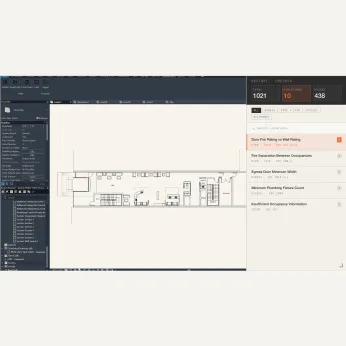
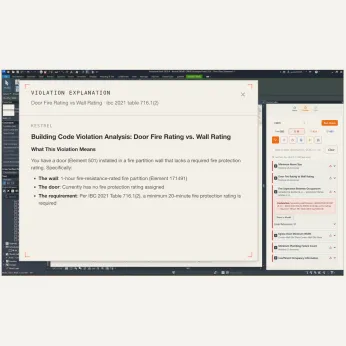
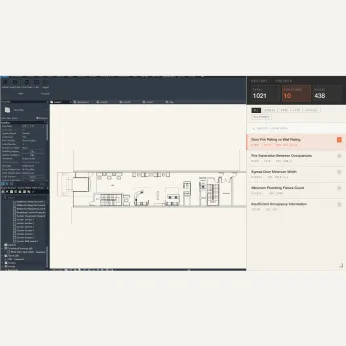
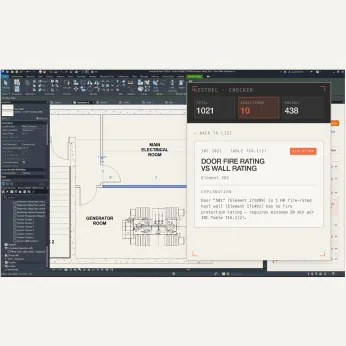
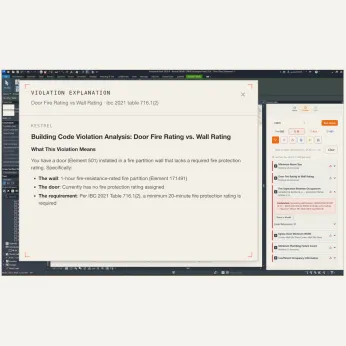
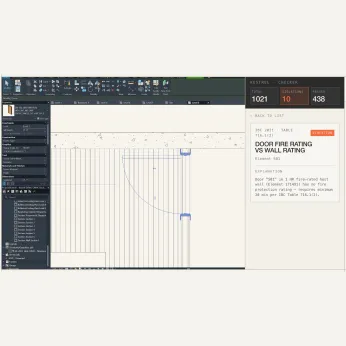
Working natively inside Autodesk Revit, Kestrel analyzes BIM models against applicable building code requirements and highlights potential issues directly within the model. Architects can see what needs attention, where it occurs, and which code provisions apply, allowing teams to address compliance questions earlier and with greater confidence.
Architects can also use Kestrel Compliance Chat, an AI building code assistant built specifically for design teams. Designers can ask project-specific code questions and receive answers grounded in the project's jurisdiction, occupancy, and model context, with cited code references for transparency and verification.
By bringing compliance guidance into everyday design workflows, Kestrel helps reduce time spent searching through code books, coordinating interpretations, and responding to preventable review comments. The result is fewer surprises, faster iterations, and a clearer path from design to permit.
Kestrel supports architects throughout the design process by turning building code from a manual research task into actionable guidance where design decisions are made.